Loop Glass
Making things from 100% upcycled glass
Working with recycled glass
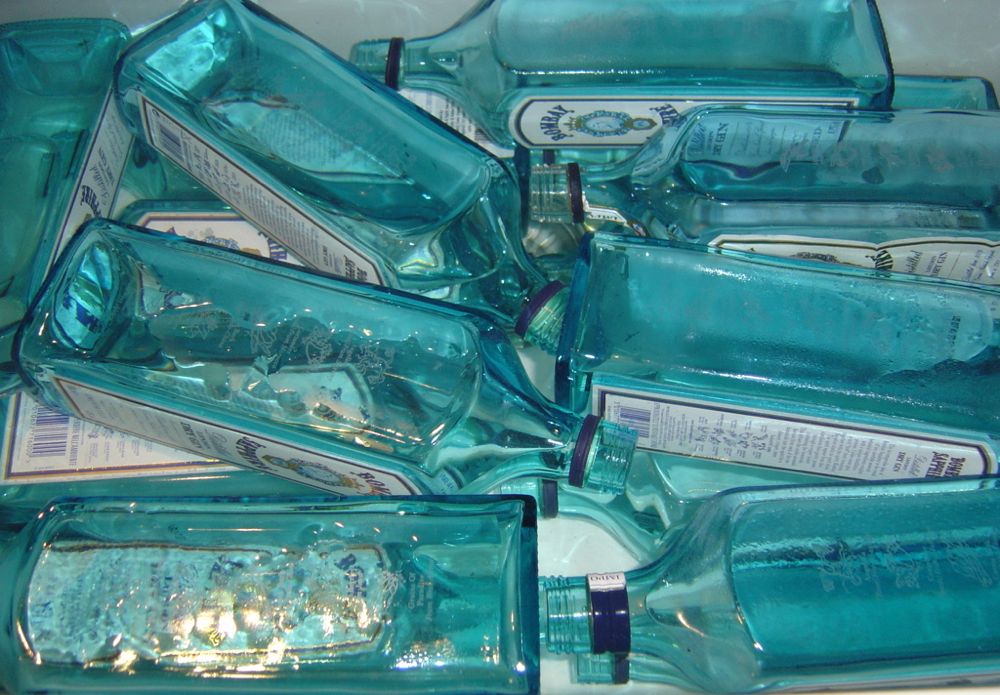
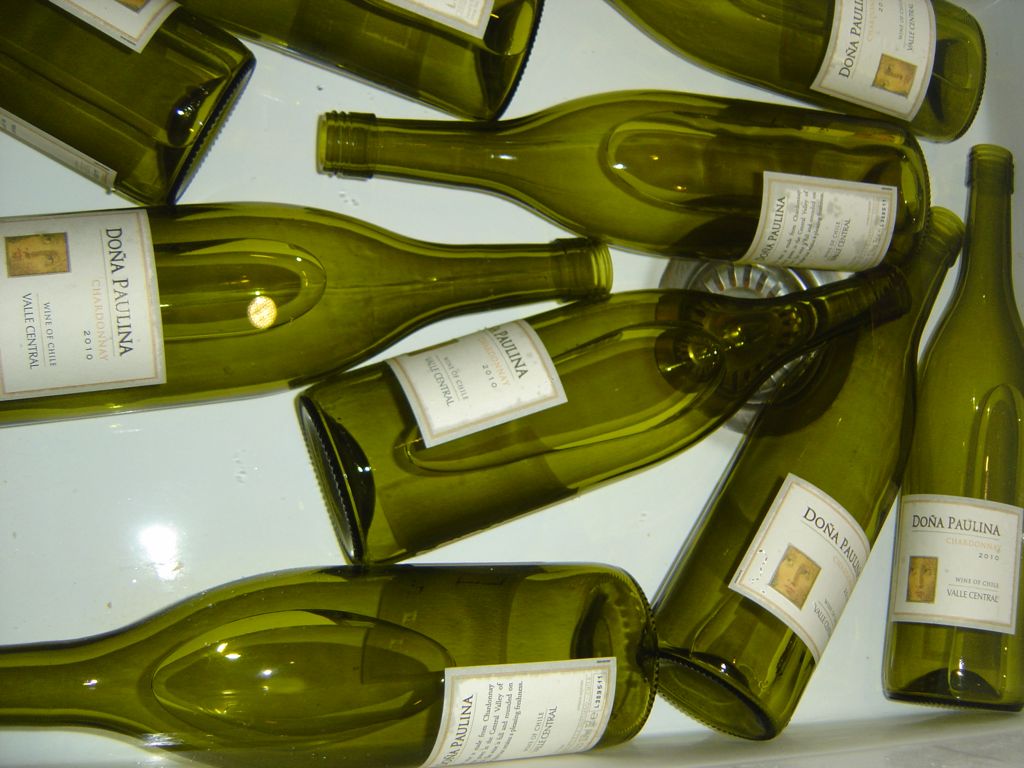
The work is created from post-consumer glass. Bottle, window or old shop shelving, tvs and seaglass.
There is no compromise in the quality of the product that can be created, but due to its technical limitations and its abundance, using waste glass provides a creative force. It makes things a bit more interesting as glass compatibility is a central concept when fusing glass.
We aim to be part of a circular economy which limits use of virgin materials - espacially precious ones like our finite beach sand.
Product life-cycle and Sustainability
Glass making involves mining finite resources in an invasive way and using large amounts of energy to transport and to transform them into virgin glass. Whilst my choice to use only recycled materials is not going to change the world, it has the potential to make life more creative whilst making a contribution to issues like global warming and ocean acidification and more local habitat loss. Recycling glass reduces the need to mine and transport sand, sodium carbonate, dolomite and limestone. These raw materials release chemically bound carbon dioxide. Melting glass from virgin materials is an energy intensive process, but reforming existing glass in a kiln is less so.
Glass making techniques
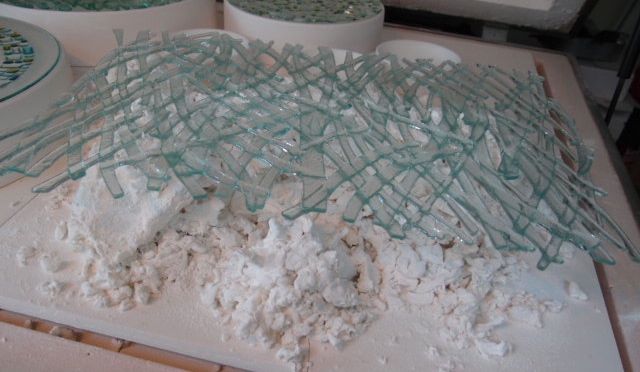
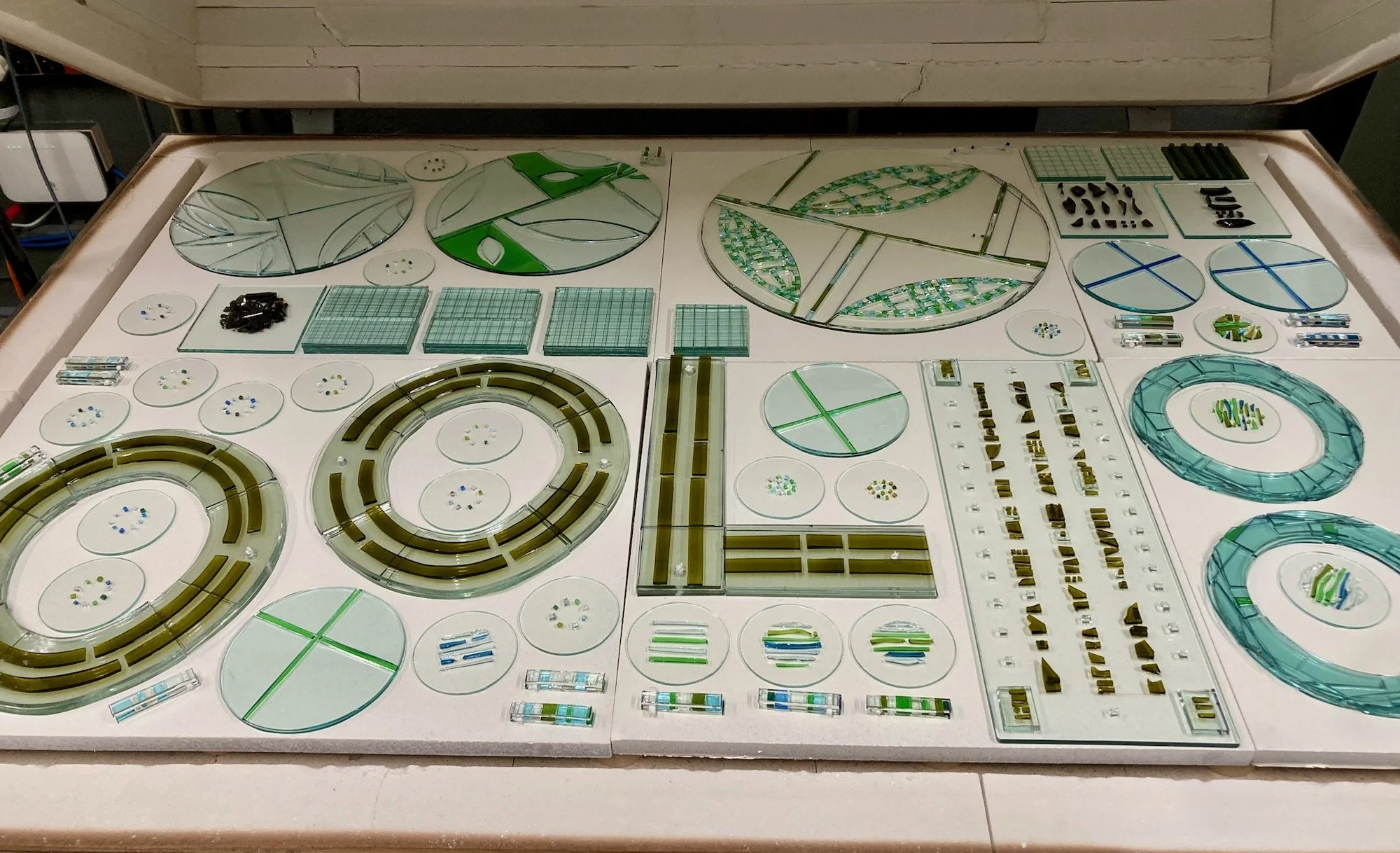
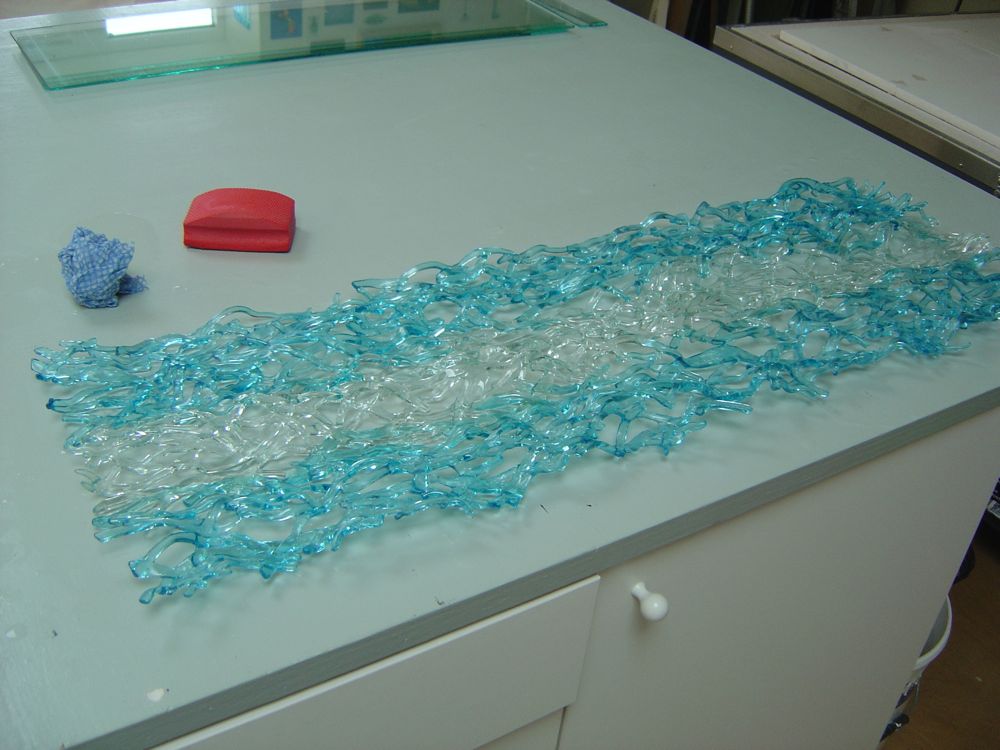
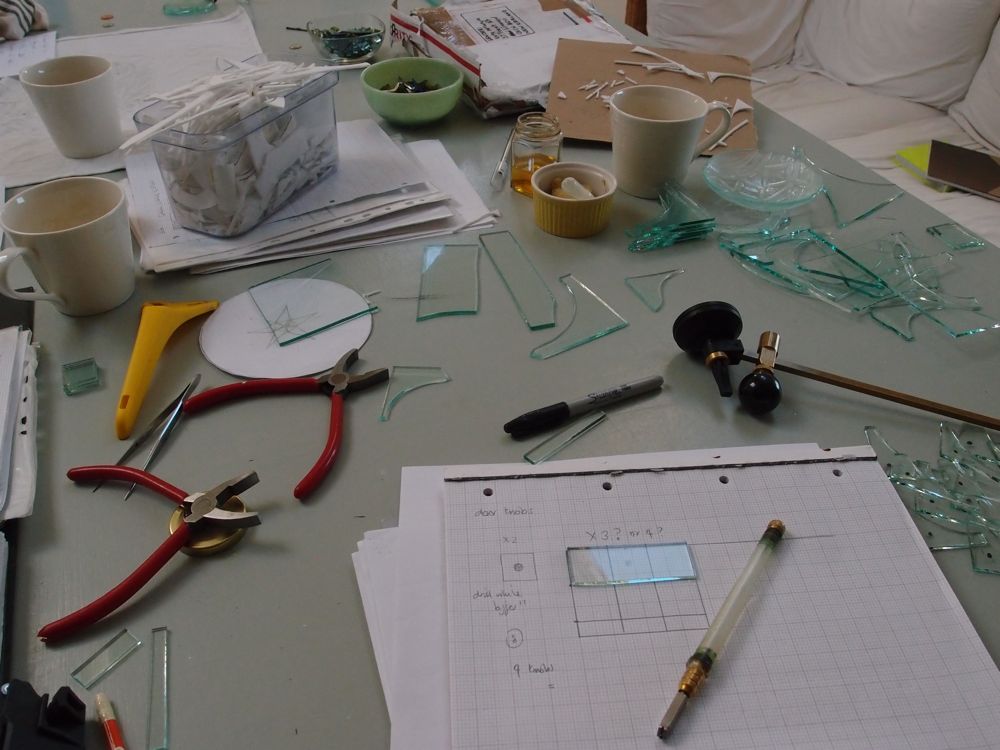
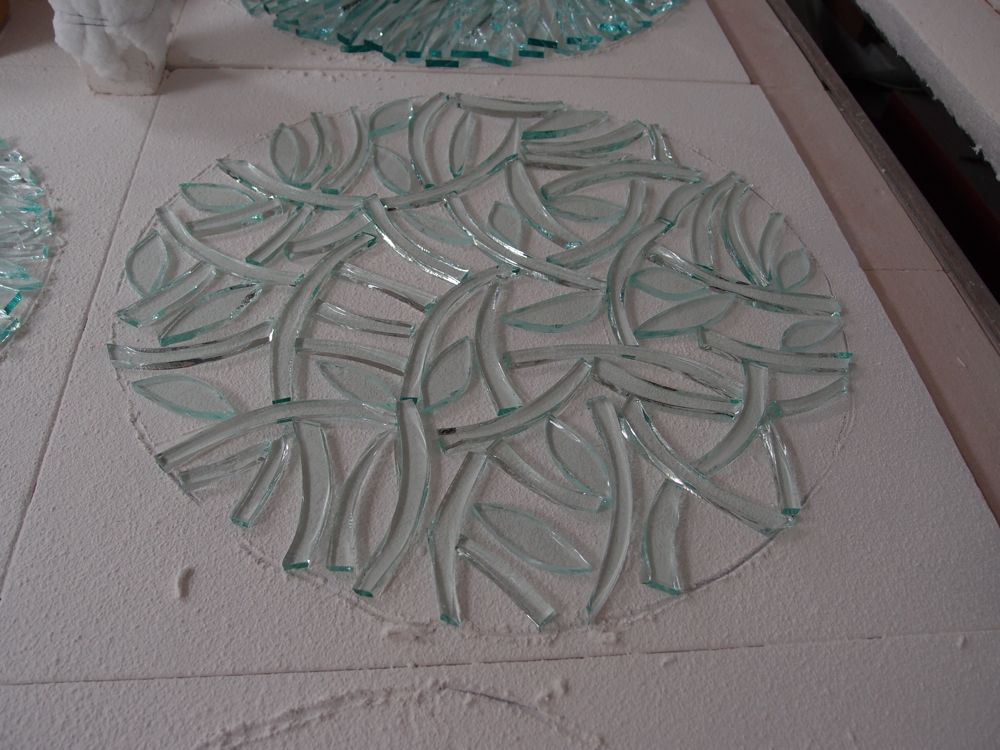
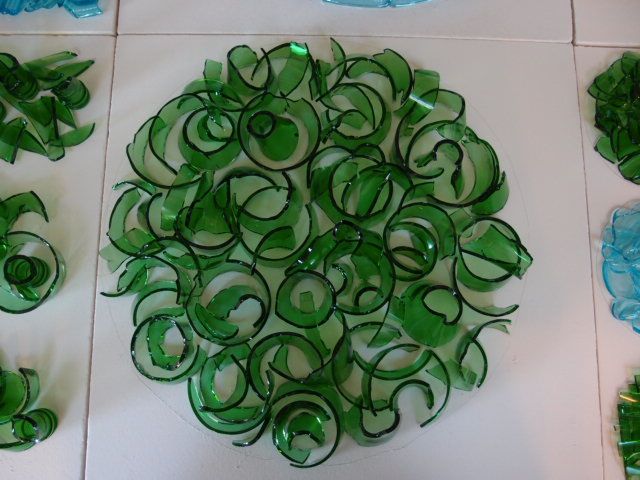
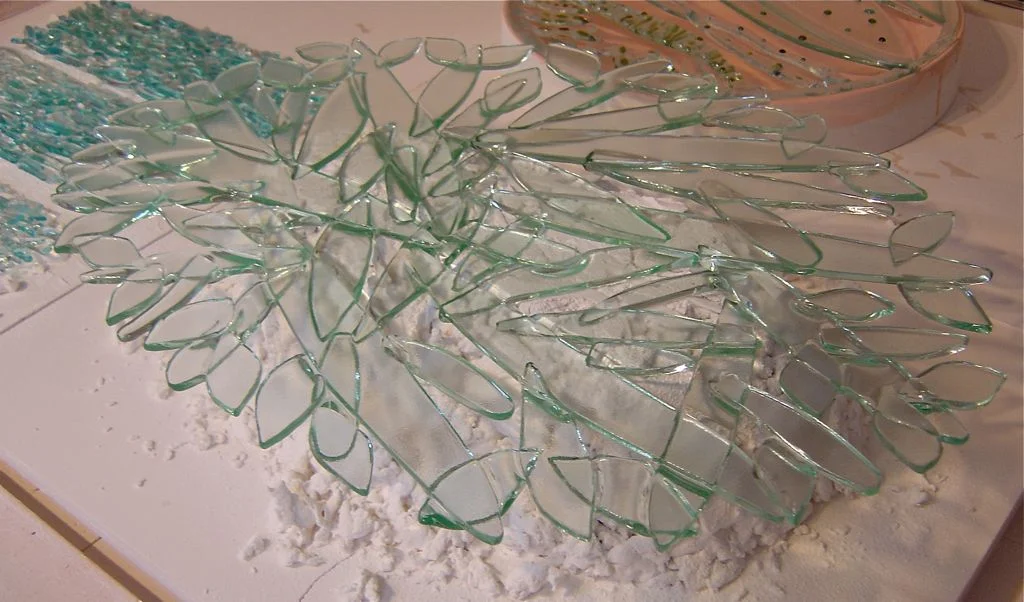
Bottles are cleaned up, processed into flat sheets and annealed to remove stress. Creating a new raw material that can be cut into intricate shapes. Fusing joins pieces in the kiln. Slumping is the process of bending glass over a mould and takes place as a separate firing at a lower temperature.
Annealing conditions the glass through controlled cooling. At around 500 degrees, when the glass is beginning to return to a solid form, it is held at the annealing temperature in order to become uniform in state throughout the piece.
Thicker or bigger pieces of glass take longer to achieve this. The recommended anneal time for a 12 mm thick piece of glass is 2 hours followed by a 5 hour controlled cooling cycle.
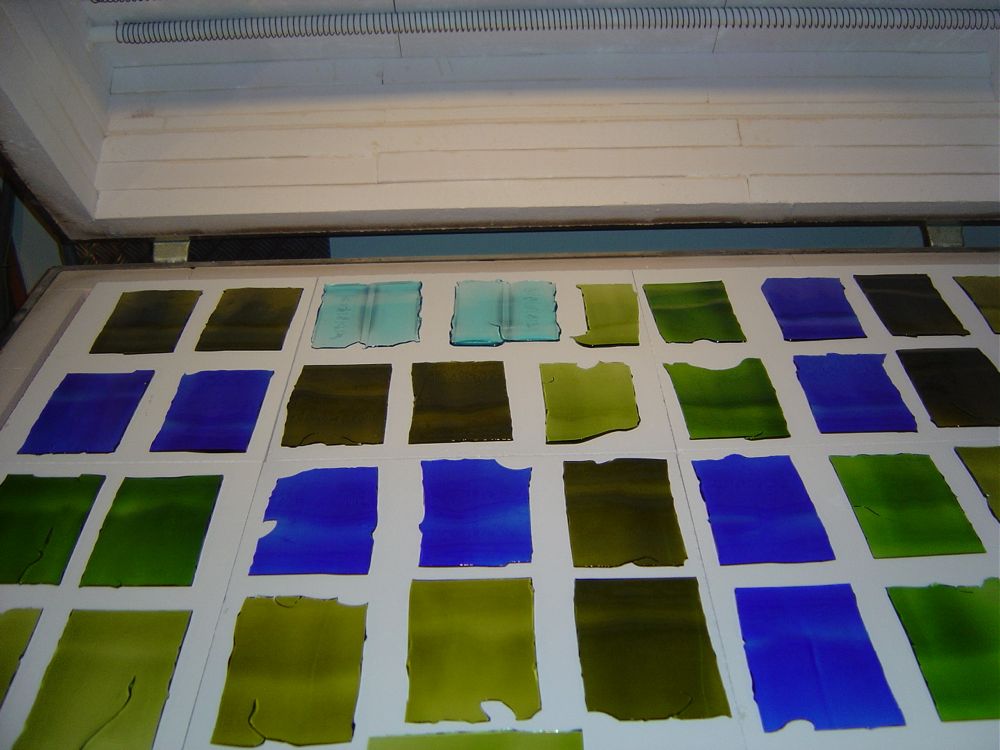
What is glass compatibility?
Recycled glass limits what’s possible. Every bottle is potentially from a different batch of glass with different characteristics. Compatibility is determined by ‘coefficient of expansion’. This is the amount that glass expands on heating and contracts on cooling. It occurs at different rates in different glass and can make them incompatible with one another. Careful design and conservative annealing dictates what is possible. But these constraints are a gift, they provide both limitations and direction!
Kiln and mould preparation
Moulds can be reusable ceramic, or one-trip plaster moulds for individual pieces. Carved vermiculite board or bricks can also be used to create reusable moulds along with a suitable primer/separator material. While colour availability is limited in recycled glass, creating form is unlimited.
Surfaces that come into contact with hot glass need to be coated in a primer to prevent sticking. The ceramic kiln shelves are coated with a primer before each firing or a reusable dry separator can be used.